Traditional Marketing vs Digital Marketing
Traditional Marketing vs Digital Marketing: Key Differences, Benefits & Which One is Better?
Traditional Marketing vs Digital Marketing is one of the most common comparisons businesses make when planning their marketing strategy. While traditional marketing has helped brands grow for decades, digital marketing has transformed the way businesses connect with customers. Understanding the strengths and limitations of both approaches will help you choose the right strategy for your business.
What is Traditional Marketing?
Traditional marketing refers to offline promotional methods that have been used for many years. These include television advertisements, newspaper ads, radio commercials, magazines, brochures, billboards, direct mail, and event sponsorships.
Traditional marketing is effective for reaching local audiences and building brand recognition. Large companies often use television and print advertising to create awareness among a broad audience. However, measuring results accurately can be difficult, and campaign costs are generally higher than digital marketing.

What is Digital Marketing?
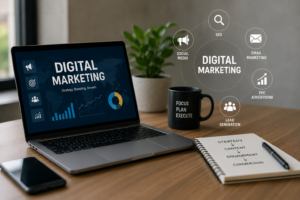
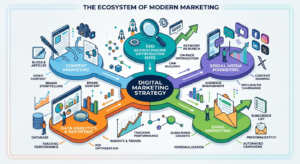
Digital marketing involves promoting products or services using online platforms such as search engines, social media, email, websites, and paid advertising. It enables businesses to reach a global audience while tracking campaign performance in real time.
Popular digital marketing channels include:
- Search Engine Optimization (SEO)
- Content Marketing
- Social Media Marketing
- Email Marketing
- Google Ads
- Pay-Per-Click (PPC)
- Affiliate Marketing
Unlike traditional marketing, digital marketing allows businesses to adjust campaigns quickly based on data and customer behavior.
Traditional Marketing vs Digital Marketing
The comparison between Traditional Marketing vs Digital Marketing depends on your business goals, target audience, and budget.
Traditional Marketing |
Digital Marketing |
|---|---|
| Offline advertising | Online advertising |
| Higher campaign cost | Cost-effective marketing |
| Difficult to measure ROI | Easy performance tracking |
| Limited audience reach | Global audience reach |
| One-way communication | Two-way customer engagement |
| Slower campaign updates | Instant campaign optimization |
Digital marketing offers greater flexibility, making it ideal for startups and small businesses looking to maximize their marketing budget.
Benefits of Digital Marketing
Digital marketing has become the preferred choice for many businesses because it offers several advantages:
- Lower marketing costs
- Better audience targeting
- Higher return on investment (ROI)
- Real-time analytics and reporting
- Improved customer engagement
- Faster campaign optimization
- Global market reach
Businesses can analyze customer behavior and improve their marketing strategy using measurable data, making every campaign more effective.
Which Marketing Strategy Should You Choose?
The right choice depends on your business objectives.
If your goal is local brand awareness through newspapers, flyers, or television, traditional marketing can still be effective.
However, if you want measurable results, lead generation, online visibility, and long-term growth, digital marketing provides significantly more opportunities. Many successful businesses now combine both methods to create an integrated marketing strategy.
Conclusion
When comparing Traditional Marketing vs Digital Marketing, it’s clear that both have their advantages. Traditional marketing remains valuable for offline brand awareness, while digital marketing offers better targeting, measurable performance, and greater flexibility. For businesses looking to grow in today’s competitive environment, digital marketing provides the tools needed to reach the right audience and achieve sustainable growth.
If you’re looking to improve your online presence, work with a Digital Marketing Strategist in Kannur who can create customized strategies to help your business attract more customers, increase visibility, and achieve measurable results.